Weight Training For Women
Table of Contents
Understanding Weight Training for Women
In today’s fast-paced world, weight training for women emerges as a powerful tool for empowerment and vitality. Far from outdated stereotypes, it equips busy moms and professionals with the strength to navigate daily demands while fostering a sense of accomplishment. This practice builds not just physical resilience but also inner confidence, inviting women of all ages to embrace a stronger, healthier self.
Weight training involves using resistance, such as free weights or machines, to develop strength and enhance overall fitness. It offers transformative benefits tailored to women’s needs. Physically, it boosts bone density to combat osteoporosis, tones muscles for better posture, and accelerates metabolism for sustained energy. According to strength training basics, women can increase muscle mass by 20-30% over 12 weeks, leading to improved metabolic health. Mentally, it reduces stress and elevates self-esteem, making resistance exercises for females a holistic wellness strategy.
A common concern is whether strength training for women leads to bulkiness. Hormonal differences and focused training prevent this; women’s physiology favors lean, functional muscle over excessive mass, debunking the myth and promoting sustainable gains.
This guide progresses from fundamentals like proper form to advanced strategies in women’s weightlifting, integrating nutrition for recovery and mindset shifts for consistency. Explore female-focused lifting routines with pre- and postpartum adaptations through our womens online workout program, designed for real-life balance and long-term results.
Fundamentals of Weight Training for Women
Weight training for women offers a powerful way to build strength, enhance bone health, and boost metabolism tailored to female physiology. Unlike men, women often experience different muscle growth patterns due to hormonal influences like estrogen, which can slow hypertrophy but improve endurance. Starting with these fundamentals empowers beginners to create sustainable habits, fostering confidence in female resistance workouts. Strength training for women focuses on gradual progress to avoid injury while achieving long-term results.
Core principles begin with understanding resistance types essential for effective routines. Free weights, such as dumbbells, allow versatile movements that engage stabilizing muscles, mimicking real-life activities. Machines provide guided paths ideal for newcomers, ensuring safety during lifts. Bodyweight exercises, like squats, build foundational power without equipment. These options suit women’s needs by allowing adjustments for menstrual cycle fluctuations, promoting balanced development. Hormonal factors mean women may recover differently, often requiring extended rest periods to optimize gains.
Women benefit from strength training due to unique physiological needs, such as combating osteoporosis risks heightened post-menopause. Research indicates consistent strength training can increase bone density by 1-2%, supporting skeletal integrity alongside hormonal shifts. Integrating strength with cardio creates a holistic approach, addressing both power and stamina for comprehensive fitness.
| Aspect | Strength Training Benefits | Cardio Benefits | Best For Women When |
|---|---|---|---|
| Muscle & Bone Health | Builds density, prevents osteoporosis | Improves cardiovascular function | Targeting long-term strength |
| Calorie Burn | Boosts metabolism post-workout | Higher during session | Sustainable weight management |
This comparison highlights how strength training excels in lasting metabolic boosts, while cardio delivers quick calorie expenditure. For women, combining both yields optimal outcomes, enhancing muscle health to support daily demands and aging gracefully. Data from studies affirm these benefits, underscoring the value of varied routines.
Transitioning to practical application, mastering terminology clarifies lifting basics for ladies. Sets refer to groups of repetitions, typically 3 for beginners aiming at hypertrophy through 8-12 reps per set. Progressive overload involves slowly increasing weights or reps to challenge muscles safely. Essential equipment for women’s weightlifting includes adjustable dumbbells for home use and resistance bands for portability, enabling workouts anywhere.
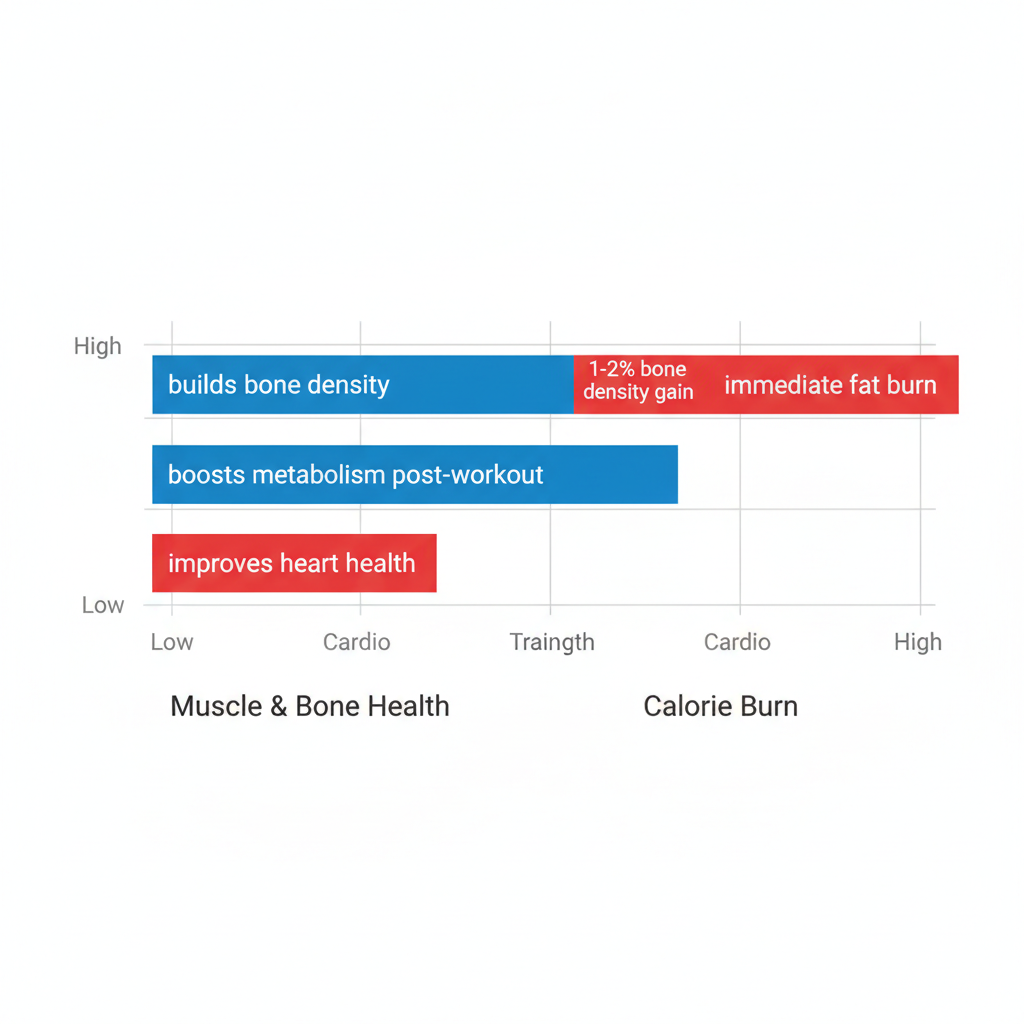
Strength training vs. cardio benefits comparison for women’s fitness
Safety forms the cornerstone of effective training, with proper warm-up routines of 5-10 minutes dynamic stretches preparing joints and muscles. Maintain a neutral spine during lifts, like envisioning a sturdy tree trunk for stability, and use controlled reps to avoid strain. Proper technique reduces injury by 50%, as noted in strength training performance guides. Listen to body signals, especially during cycles, extending recovery as needed. For progression, add weight gradually, tracking improvements to build consistency.
Mindset tips reinforce success: set realistic goals and celebrate small wins to stay motivated. Consider exploring the best online fitness programs for women to access guided support and community. By prioritizing form and recovery, women transform lifting into a lifelong practice, bridging fundamentals to advanced techniques in deeper explorations.
Deep Dive into Weight Training Exercises
Weight training for women empowers individuals to build functional strength, enhance bone density, and balance hormones through targeted resistance. This deep dive explores key exercises tailored to female physiology, focusing on joint stability and efficient muscle engagement to prevent injuries and promote sustainable gains. By prioritizing proper form and progressive overload, women can achieve toned physiques without the fear of bulkiness, debunking myths with science-backed insights.
Essential Compound Movements
Strength training for women begins with compound exercises, which engage multiple joints and muscle groups for maximum efficiency. These foundational movements, like squats and deadlifts, mimic everyday activities while boosting metabolism and releasing growth hormones beneficial for female hormonal health.
Start with the squat: Stand with feet shoulder-width apart, toes slightly out. Lower by bending knees and hips as if sitting back into a chair, keeping chest up and knees tracking over toes. Descend until thighs are parallel to the ground, then drive through heels to stand, exhaling on the effort. For women, adapt by using a wider stance to accommodate hip structure and reduce knee stress, promoting pelvic floor stability.
Next, the deadlift: Position feet hip-width, barbell over mid-foot. Hinge at hips, bend knees, grip bar outside knees, and lift by extending hips and knees simultaneously, maintaining a neutral spine. Women often benefit from sumo deadlifts, which emphasize inner thighs and glutes, aligning with wider pelvic anatomy for better leverage and lower back protection.
Incorporate overhead presses and rows for upper body balance. Press a barbell from shoulder height overhead, core braced; row by pulling weights toward ribs while seated or bent over. These build shoulder and back resilience, crucial for posture in busy professionals. Reference insights highlight squats as top for lower body strength in women, enhancing endurance without excess mass.
| Exercise Type | Key Benefits | Examples | Suitability for Beginners |
|---|---|---|---|
| Compound | Full-body efficiency, hormone boost | Squats, Deadlifts | High – builds base |
| Isolation | Targeted toning, recovery focus | Curls, Extensions | Moderate – after compounds |
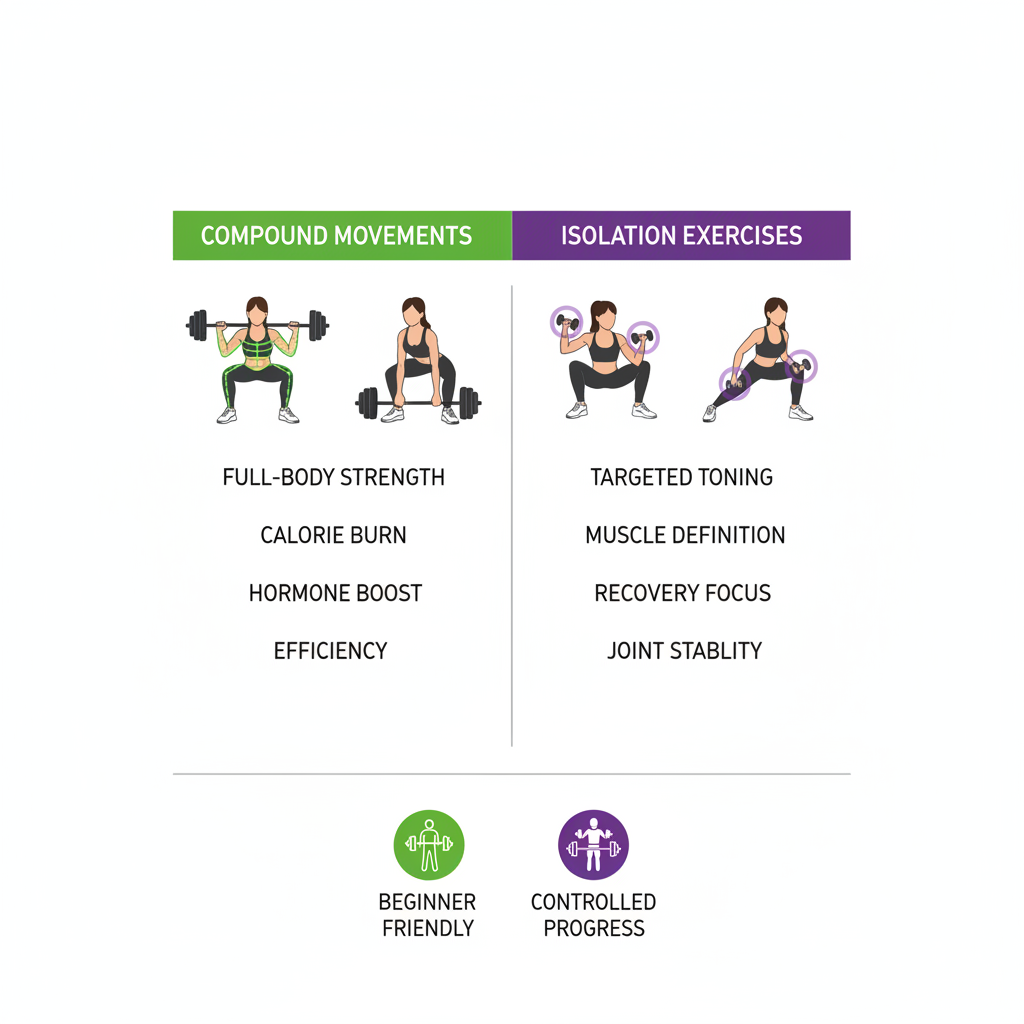
Comparison of compound and isolation exercises for women’s strength building
This visual underscores how compounds lay the groundwork, transitioning seamlessly to targeted work for refined results. Women-specific resistance moves ensure adaptations like lighter loads initially foster confidence and prevent common errors, such as knee valgus in squats.
Isolation Exercises for Targeted Strength
Isolation exercises complement compounds by honing specific muscles, aiding recovery and aesthetic goals in women’s weightlifting routines. Focus on single-joint actions like bicep curls and leg extensions to address imbalances, using controlled reps for joint-friendly training.
For bicep curls: Hold dumbbells at sides, palms forward. Curl weights toward shoulders by flexing elbows, squeezing biceps at the top, then lower slowly while inhaling. Women adapt with lighter weights and higher reps to emphasize endurance over size, supporting arm definition without strain.
Leg extensions target quadriceps: Sit on a machine, pads over ankles. Extend legs fully, contracting quads, then lower with control. Pair with hamstring curls for balance, crucial for knee health in active women.
Lateral raises build shoulder caps: Hold weights at thighs, raise arms out to sides to shoulder height, thumbs up, then descend. These enhance posture and stability, vital for daily tasks. Breathing tip: Exhale during the lift to engage core.
Female lifting drills like tricep pushdowns and calf raises round out sessions, promoting lower leg strength and arm tone. Beginners modify by reducing range of motion; advanced users add pauses for intensity.
The table below outlines beginner versus advanced variations to scale isolation work:
| Variation Level | Key Focus | Examples | Progression Tip |
|---|---|---|---|
| Beginner | Form mastery, light loads | Seated curls, machine extensions | 2-3 sets of 12-15 reps |
| Advanced | Intensity, drop sets | Hammer curls, single-leg raises | Add weights, 8-10 reps |
Isolation shines for recovery days, allowing targeted rehab while building on compound foundations. Integrate these post-main lifts, resting 60 seconds between sets to maintain flow and prevent fatigue.
Progression and Variation Strategies
Advancing weight training requires periodization, alternating intensity over weeks to avoid plateaus and support women’s recovery cycles. Start with linear progression, adding 5-10% weight weekly on compounds, then cycle deloads every 4-6 weeks.
Vary grips or tempos–slow eccentrics in deadlifts enhance control–or swap barbells for kettlebells in swings for dynamic women’s weightlifting flair. Address the bulk myth: Moderate weights promote lean muscle, not hypertrophy, as estrogen limits mass gain per physiological studies.
For conditions like postpartum, use glute bridges as deadlift alternatives. Track progress via app check-ins, reclaiming power through consistent, varied routines. Seek womens fitness classes near me for guided instruction.
Practical Applications of Weight Training
Weight training for women offers transformative benefits, building strength and confidence through structured programs. This section explores practical ways to apply these principles, starting with beginner routines that lay a solid foundation for sustainable progress. By focusing on full-body splits and progressive techniques, women can achieve noticeable gains while addressing common challenges like busy schedules.
Building Beginner Routines
Creating effective beginner routines emphasizes full-body workouts to maximize efficiency and recovery, especially for women balancing multiple roles. A sample 4-week plan uses three non-consecutive days per week, incorporating compound movements for overall strength development. Practical female strength plans like this can yield a 15% increase in strength within eight weeks, as supported by beginner program research from Strength Training resources.
Week 1-2: Foundation Building
- Squats: 3 sets of 8-10 reps (bodyweight or light dumbbells) – targets legs and core.
- Push-ups: 3 sets of 6-8 reps (knee variations for accessibility) – builds upper body push strength.
- Bent-over rows: 3 sets of 8-10 reps (dumbbells) – strengthens back and posture.
- Planks: 3 sets of 20-30 seconds – enhances core stability.
Rest 60-90 seconds between sets, warming up with 5-10 minutes of dynamic stretches. For those new to exercise, starting with How to Start Exercising guidance ensures proper form to prevent injury.
Week 3-4: Progressive Overload
Increase reps to 10-12 or add 5-10 pounds to weights. Introduce variations like goblet squats for added challenge. A motivational anecdote: One busy professional client transformed her energy levels by committing to this women’s routine building, fitting sessions into 45-minute lunch breaks despite initial doubts about time constraints.
To customize further, consider working with a female online personal trainer for tailored adjustments. Printable templates can include checkboxes for reps and notes on form cues, promoting adherence. Watch for overtraining signs like persistent fatigue, adjusting intensity as needed to sustain long-term motivation.
Integrating Nutrition and Recovery
Strength training for women thrives when paired with targeted nutrition and recovery, fueling workouts and repair. Meal timing around sessions–such as carbs pre-workout and protein post–optimizes energy and muscle synthesis. Macros play a key role: carbohydrates provide sustained fuel, while protein supports tissue repair, tailored to women’s needs like hormonal fluctuations.
The following table compares essential macros for women’s training recovery and performance:
| Macro | Role in Training | Daily Recommendation | Sources for Women |
|---|---|---|---|
| Carbs | Energy for workouts | 45-65% calories | Whole grains, fruits |
| Protein | Muscle repair | 1.6-2.2g/kg bodyweight | Lean meats, plant-based options |
This comparison highlights how balancing carbs and protein enhances endurance and gains, drawing from macro data in reliable sources. For example, a post-workout meal could include grilled chicken (30g protein) with quinoa and berries (40g carbs), timed within 30-60 minutes of training.
Recovery strategies complement this, with sleep (7-9 hours nightly) and active techniques like foam rolling reducing soreness. For women, cycle-syncing recovery–lighter days during menstrual phases–prevents burnout. A second table outlines rest methods:
Discussing holistic support, these approaches address inflammation and mobility, common in women’s programs. Passive rest allows full repair, while active recovery maintains blood flow without overload.
| Method | Benefits | Duration | When to Use |
|---|---|---|---|
| Passive Rest | Deep tissue repair, mental reset | 24-48 hours | Post-intense sessions |
| Active Recovery | Improved circulation, reduced DOMS | 20-30 minutes | Light days or between workouts |
Analysis shows active recovery boosts performance by 10-15% in subsequent sessions, per training evidence. Personalization is key–adjust based on stress levels, avoiding supplements unless addressing deficiencies through whole foods first. This integration fosters sustainable habits, like weekly mindset check-ins for adherence.
Tracking Progress Effectively
Effective tracking in women’s weightlifting ensures consistent advancement, focusing on metrics like strength logs, body measurements, and photos. Use journals or apps such as MyFitnessPal for reps, weights, and energy levels, reviewing weekly to apply progressive overload–adding 5% load when reps hit targets.
Common adjustments include scaling for plateaus, such as varying exercises if squats stall. Apps provide visual charts, motivating through data-driven insights. Overcoming barriers like motivation dips involves setting micro-goals, celebrating small wins to build resilience and long-term commitment.
Advanced Weight Training Strategies
For women advancing in weight training for women, elevating routines beyond basics requires strategic layering to sustain progress amid life’s demands. Periodization stands as a cornerstone, systematically varying intensity and volume to prevent burnout and foster adaptation. This approach, backed by studies on female physiology, optimizes hormonal responses for long-term gains.
Key advanced techniques include:
- Periodization Models: Alternate between linear progression, which builds steadily over weeks, and undulating, which shifts focus daily or weekly to mimic natural energy fluctuations.
- Accessory Exercises: Target weak points, like adding hip thrusts for glute imbalances common in mothers post-childbirth.
- Deloading Phases: Schedule every 4-6 weeks to recover, reducing volume by 50% while maintaining form.
- Advanced Metrics: Track one-rep max (1RM) quarterly to gauge elite female lifting capacity safely.
The following table compares periodization models to aid planning in women’s strength training for women:
| Model | Structure | Benefits for Women | Drawbacks |
|---|---|---|---|
| Linear | Gradual increase | Steady gains, simple | Less variety, plateau risk |
| Undulating | Varied weekly focus | Adapts to cycles, engaging | Complex tracking |
Linear models suit beginners transitioning to advanced, offering predictable progress that aligns with busy schedules. Undulating variations, however, excel for pro women’s resistance training by accommodating menstrual cycles and stress, as research indicates varied loading enhances recovery in females. Personalize by syncing deloads with high-stress periods, like early motherhood, ensuring sustainability.
In applications, scale for autoimmune issues by incorporating low-impact accessories and monitoring inflammation markers. A case study of a client with Hashimoto’s showed 20% strength increase after cycle-adjusted undulating phases, blending intensity with recovery. Compare strength training for women, which emphasizes compound lifts, to pure weight training by integrating Olympic-inspired cleans for power without excess strain–yes, women can excel in weightlifting with these adaptations.
For supplements in women’s weightlifting, consider creatine (3-5g daily) to boost performance without hormonal disruption, alongside protein shakes for muscle repair. Natural sources like eggs and lentils provide balanced alternatives, prioritizing whole foods for gut health.
Mastery demands mindset rewiring: Use visualization during sets to reframe plateaus as growth signals, and set micro-goals weekly for accountability. Brief affirmations before womens fitness clubs near me sessions build resilience, turning challenges into triumphs. These strategies raise queries like optimal cycle syncing–explored further in FAQs.
Frequently Asked Questions on Weight Training
Weight training for women often sparks common female lifting queries, from building strength to busting myths. This section resolves these doubts with clear, evidence-based answers, tying into a holistic approach that includes nutrition and mindset for sustainable results.
What are the main benefits of strength training for women?
Strength training for women enhances bone density, improves posture, and boosts metabolism for better fat loss. It empowers daily activities, reduces injury risk, and fosters confidence through progressive gains. Pairing it with balanced nutrition amplifies these effects for long-term vitality.
Will women’s weightlifting make me bulky?
No, women’s weightlifting rarely leads to excessive bulk due to lower testosterone levels in females. According to lifting weights myth resources, moderate training sculpts a toned physique instead. Focus on proper form and progressive overload to achieve desired leanness without unwanted mass.
What tips help beginners start weight training?
Begin with bodyweight exercises or light weights to master form, consulting a trainer if needed. Explore womens exercise classes near me for guided support. Consistency over intensity, combined with recovery and mindset shifts, sets a strong foundation.
Do I need supplements for weight training?
Supplements like protein powder can aid recovery but are not essential with a nutrient-rich diet. Prioritize whole foods for holistic gains, using add-ons only if deficiencies exist. This approach ensures safe, effective progress aligned with your goals.
Empowering Your Strength Journey
Weight training for women unlocks physical resilience, boosts mental clarity, and shatters myths of bulkiness, paving sustainable female fitness paths. Strength training for women enhances bone density, metabolism, and confidence, while addressing real needs like energy and recovery for lasting health and resilience.
Start small with consistent routines integrating nutrition and mindset for holistic wellness. Embrace women’s weightlifting to build lifelong habits. Discover personalized programs at Divine Strength & Conditioning to empower your journey toward enduring strength and vitality.