Fitness Program For Women
Table of Contents
Building Your Personalized Fitness Program for Women
Crafting a fitness program for women means navigating unique challenges like hormonal shifts, family demands, and career pressures. Many women juggle these while seeking sustainable ways to build strength and vitality. According to the Mayo Clinic, regular exercise enhances cardiovascular health and bone density, with women who stay active reducing osteoporosis risk by 20 percent. A tailored approach empowers you to reclaim energy and confidence at any stage.
This holistic wellness strategy integrates mind, body, and lifestyle for lasting results. Focus on muscle building through strength training for women to reduce inflammation and foster mindset shifts toward resilience. For new mothers, a postpartum workout program supports gentle recovery, addressing specific needs like core rebuilding and chronic condition management. Variations such as a women’s exercise routine or maternal fitness plan adapt to busy professionals or older women, promoting mobility and longevity.
Discover our 7-step guide ahead, starting with preparation and troubleshooting tips. Leverage integrated tools like apps for tracking progress and community support to stay motivated. Explore best online fitness programs for women for flexible, science-backed options that fit your life.
Preparing to Start Your Fitness Journey
Embarking on a fitness program for women demands careful preparation to align with your unique health profile and lifestyle. Whether you’re a busy professional or navigating postpartum recovery, starting right sets the foundation for sustainable progress and enjoyment in your women’s wellness routine.
Self-Assessment (First Step to Safety)
Begin with honesty to avoid overwhelm. Consult a healthcare provider for clearance, especially if postpartum or managing chronic conditions. For maternal exercise preparation, this step is crucial to tailor a postpartum workout program safely. Assess your current fitness level through simple tests like holding a plank for 30 seconds or walking briskly for 10 minutes. The CDC recommends beginning with 150 minutes of moderate activity weekly to reduce injury risk, allowing beginners to build gradually. A 40-year-old professional might discover low mobility, prompting realistic adjustments.
Goal Setting (Define Your Path)
Clarify motivations to stay committed. Identify specific aims like weight management, strength gain through strength training for women, or improved mobility for daily tasks. Journal these goals to track mindset shifts and celebrate small wins. Realistic targets, such as three 20-minute sessions weekly, foster long-term habits without burnout. This preparation ensures your routine supports overall wellness.
Gathering Resources (Equip for Success)
Stock basic home workout gear like resistance bands or yoga mats for accessible sessions. Explore a womens online workout program for guided structure. Consider introductory nutrition for sustained energy, focusing on balanced meals with proteins and veggies. With these tools, you’re ready for structured exercises ahead.
Assess Your Fitness Goals and Level
Begin your fitness journey by assessing your current level and setting clear goals. This foundational step ensures your fitness program for women aligns with your unique needs, whether building endurance or recovering postpartum. Start with simple at-home tests: measure body metrics like waist circumference and weight for a baseline; perform endurance checks using the talk test recommended by Mayo Clinic experts, where you gauge cardio ability by how easily you converse during light activity; test strength with basic moves like wall sits or push-up variations; and note flexibility through a seated reach. Track these using a journal or app to monitor progress.
Why it matters: Evaluating your starting point prevents injury by avoiding overexertion, especially for beginners in strength training for women. It customizes your personalized women’s routine, addressing factors like age, postpartum status, or chronic conditions for safe, effective gains.
Tips for realistic goal-setting:
- Use SMART criteria: Specific, Measurable, Achievable, Relevant, Time-bound, like “build core strength post-baby in 12 weeks.”
- Prioritize one or two goals in your goal-oriented exercise plan to stay motivated.
- Reassess every four weeks to adjust, transitioning smoothly to selecting your program in the next step.
Choose the Right Program Type
After assessing your goals, selecting the right program type is crucial for sustainable progress. Consider three main varieties tailored to women’s needs. Full-body strength programs build muscle and boost metabolism, ideal for beginners or busy professionals over 40 seeking strength training for women. Cardio-endurance routines enhance heart health and stamina, perfect for those aiming to increase daily activity without heavy lifting. Recovery-based options, like a postpartum workout program, focus on gentle rebuilding for new moms navigating life-stage transitions, incorporating mobility and core restoration.
Personalization ensures a fitness program for women aligns with your lifestyle, whether online for flexibility or in-person for accountability. A female online personal trainer can customize routines, integrating nutrition for holistic results. According to Mayo Clinic insights, strength programs improve daily function by 30%, justifying why stage-specific routines matter for long-term adherence.
When choosing, start with trial periods to test fit–many platforms offer 7-14 day previews. Evaluate pros like convenience against cons such as self-motivation needs, especially postpartum where cardio might ease back in versus strength for empowerment. This step bridges to building your routine effectively.
Build Your Strength Training Routine
To build an effective strength training for women, start with a full-body circuit performed 2-3 days per week, allowing rest days for recovery. Begin with bodyweight exercises and progress to light weights as strength improves. Focus on proper form to prevent injury, as recommended by the Mayo Clinic, where technique reduces risk by 50 percent.
Key women’s resistance exercises include: squats (lower body push, feet shoulder-width, lower as if sitting back into a chair); rows (upper back pull, using dumbbells or resistance bands, squeeze shoulder blades); push-ups (chest and arms, modify on knees for beginners); deadlifts (posterior chain, hinge at hips with flat back); and planks (core stability, hold forearm position for 20-30 seconds). Perform 3 sets of 8-12 reps each, emphasizing controlled movements.
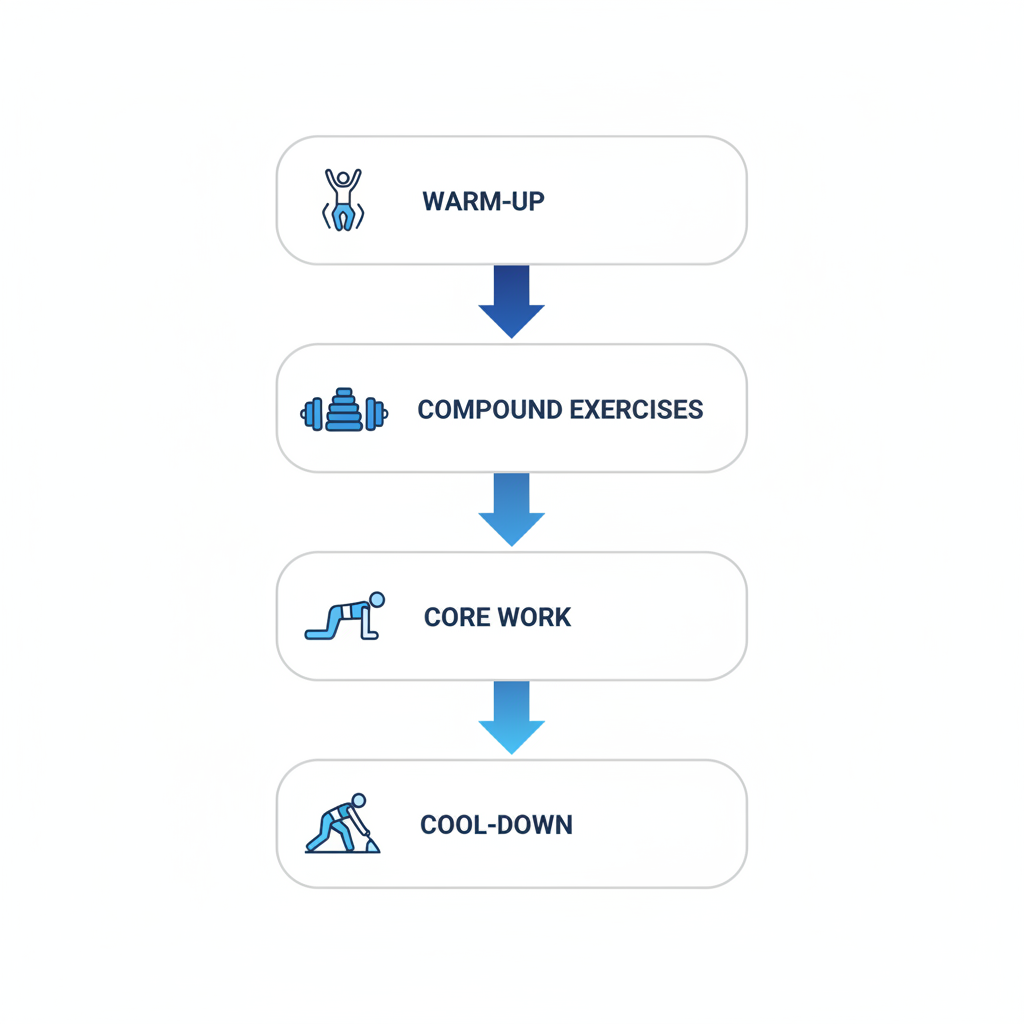
Step-by-step women’s strength training routine process
Incorporating muscle-building workouts for females enhances daily functionality, reduces inflammation, and boosts metabolism for long-term health.
For progression in your fitness program for women, track reps weekly, increase weight gradually, and prioritize recovery with nutrition and sleep. Consult a trainer for personalized adjustments to ensure safe advancement from beginner to advanced levels.
Incorporating Postpartum Exercises
After childbirth, integrating postpartum exercises into your fitness program for women supports safe recovery and helps rebuild core strength. This approach prioritizes healing, preventing issues like diastasis recti, and gradually restoring energy as a new mom.
Begin your postpartum workout program only after consulting your doctor, typically waiting 6 weeks post-vaginal birth as recommended by the CDC. Start with pelvic floor exercises, like Kegels, combined with deep breathing to engage the core gently. Progress to a 10-minute daily new mom recovery routine: gentle mobility such as cat-cow stretches and walking, then light strength moves like seated leg lifts. Schedule sessions around baby routines for consistency, aiming for three short sessions weekly in a post-birth strength plan.
Listen to your body throughout this process; stop if you feel pain or fatigue. A female personal trainer online can provide personalized guidance to ensure proper form and progression, enhancing your recovery safely.
Integrate Nutrition and Mindset
To fully embrace a fitness program for women, integrate nutrient-dense, macro-balanced meals that fuel your body without restriction. Start with simple affirmations like “I am strong and resilient” during morning routines, paired with quick gut-healthy snacks such as Greek yogurt with berries for busy professionals. Join our weekly workshops to learn label reading and craft meals supporting strength training for women, emphasizing lean proteins and whole grains for sustained energy.
This synergy enhances overall performance and mental clarity, as the Mayo Clinic notes that adequate protein intake supports muscle repair post-workout, promoting longevity especially for women over 40. By aligning nutrition with exercise, you build holistic women’s wellness and foster mindful exercise integration for lasting resilience.
For practical hacks in a postpartum workout program, try overnight oats with nuts for recovery nutrition–ideal for busy moms reclaiming their energy. Track progress in our app to refine habits and access recorded workshop content for seamless support.
Leverage Apps and Community Support
To integrate technology into your fitness program for women, begin by downloading the proprietary app provided by your women fitness coach. This tool serves as an all-in-one hub for customized workouts, macro-based meal plans, and progress tracking. Set up your profile with personal goals, then enable notifications for daily check-ins and workout reminders. Join the in-app community to connect with other participants, sharing updates on your strength training for women routines, such as tracked lifts for squats and deadlifts. Use the messaging feature for real-time coaching adjustments from your coach.
These digital women’s fitness tools significantly boost adherence by providing visual progress tracking, which studies show can increase motivation by 40 percent according to Healthline reviews. The supportive online routines foster accountability, making it easier to stay consistent amid busy schedules.
Maximize benefits by participating in weekly community challenges, like a group plank hold contest, to build camaraderie. Regularly log metrics such as weight lifted or steps taken, and review workshop recordings on mindset and recovery for holistic support. This step seamlessly transitions into ongoing monitoring for sustained results.
Monitor Progress and Adjust
To ensure long-term success in your fitness journey, implement regular monitoring as the final step. Schedule weekly check-ins to track advancements in physical strength, endurance, and overall well-being. Use simple tools like progress photos, body measurements, and notes on daily energy levels to gauge improvements objectively. These methods of progressive exercise tracking help identify patterns and celebrate small wins, such as increased reps or better form during workouts.
Adaptation is essential in a fitness program for women, especially as needs evolve with age, recovery, or life changes. Consistent physical activity, as highlighted by the CDC, preserves independence and supports healthy aging for older women by maintaining muscle mass and mobility. Regular adjustments prevent plateaus and sustain motivation for ongoing progress.
When to adjust: If energy dips or progress stalls after four weeks, reduce intensity or shift focus, like incorporating more recovery days in a postpartum workout program. For adaptive women’s fitness, consult a professional coach if challenges persist, such as joint pain, to tailor the routine effectively. This continuity addresses hurdles and promotes sustainable results.
Addressing Common Fitness Challenges
In any fitness program for women, hurdles like time constraints and motivation dips can derail progress, but resilient exercise strategies make all the difference. Women often face unique challenges, from balancing careers and family to navigating postpartum recovery or age-related mobility shifts. By addressing these women’s fitness hurdles head-on with practical solutions, you can build lasting strength and confidence.
Here are key challenges and targeted solutions:
- Lack of Time: Busy professionals and moms struggle to fit workouts in. Opt for short, high-impact sessions€”20 minutes of full-body circuits three times a week can maintain momentum without overwhelming your schedule. Prioritize efficiency to stay consistent.
- Hitting a Plateau: Progress stalls after initial gains, especially in strength training for women. Introduce variety, like alternating weights with bodyweight exercises or trying new modalities, to reignite adaptation and prevent boredom.
- Injuries or Pain: Overuse accounts for 70% of fitness setbacks, per Mayo Clinic guidelines. Rest strategically and modify movements€”swap high-impact runs for low-impact swimming€”to heal while staying active. Consult a professional for personalized tweaks.
- Postpartum Fatigue: New moms deal with exhaustion that saps energy. A postpartum workout program starting with gentle core activations and walks helps rebuild stamina safely, focusing on recovery before intensity.
- Mindset Blocks for Older Women: Balance and joint concerns arise over 40. Adapted activities, as noted by the CDC, maintain mobility and reduce fall risks through seated strength work or yoga flows.
For overarching support, build accountability with a partner or consider online personal training for women to navigate these obstacles with expert guidance. Real-life examples, like a working mom reclaiming her energy through customized plans, show how small adjustments lead to big wins. If challenges persist, seek professional input to tailor your approach and avoid burnout. (248 words)
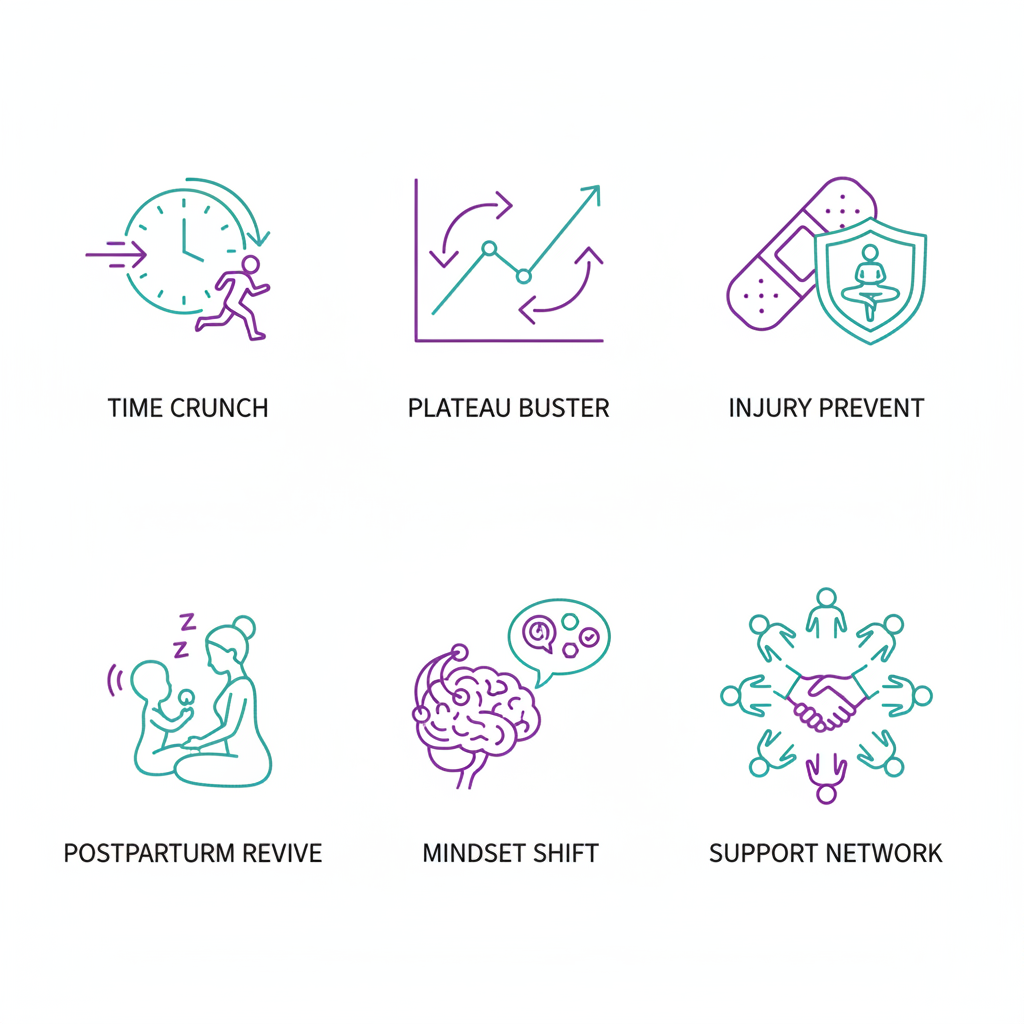
Icons addressing key fitness challenges for women
Sustaining Your Fitness Journey Long-Term
Embarking on a fitness program for women is more than a temporary commitment; it is the foundation of an enduring women’s wellness path. By following the seven essential steps from preparation to integration, you personalize your routine to fit life’s demands, ensuring consistency and holistic support. This approach builds lifelong fitness habits that transcend the gym, fostering resilience in every aspect of your day.
Key benefits shine through in enhanced strength training for women, promoting muscle development and posture improvement. For new mothers, a postpartum workout program aids gentle recovery while reigniting energy and confidence. Regular adjustments and community engagement keep motivation high, as seen in Sarah’s story: a busy professional who reclaimed her vitality post-baby through tailored sessions, now thriving with balanced energy.
Sustain your journey by reassessing goals quarterly and leaning on support networks. According to the CDC’s Getting Started with Physical Activity guide, lifelong activity reduces chronic disease risk by 30%. Empower yourself today–start with your assessed goals and step into a stronger, more vibrant you.