Postpartum Exercise Classes Near Me
Table of Contents
Safe Postpartum Exercise Classes for New Moms
Becoming a new mom brings immense joy but also unique challenges like hormonal shifts, pelvic floor weakness, and diastasis recti that can make returning to fitness feel overwhelming. Searching for postpartum exercise classes near me in the US offers a safe way to rebuild strength and confidence during recovery. According to the American College of Obstetricians and Gynecologists (ACOG), women with uncomplicated vaginal deliveries can start light activity within days of birth, while those with C-sections should wait for medical clearance, typically around six weeks. This gradual approach helps prevent injury and supports overall well-being.
Local recovery fitness sessions, such as mommy and me fitness or prenatal and postpartum yoga, provide community support and tailored movements for maternal strength training. For accessible options, explore womens fitness classes near me that align with your schedule. Divine Strength & Conditioning, led by Coach Kimmi–a certified trainer and nutritionist–specializes in customized programs for pre- and postpartum women. Their remote coaching via a user-friendly app delivers personalized postpartum workout plans, including postpartum core exercises, with real-time guidance and weekly check-ins to fit busy US moms’ lives.
These classes promote benefits like improved energy, reduced stress, and faster healing through structured sessions that blend cardio, strength, and mindfulness. Best practices include listening to your body, consulting healthcare providers, and integrating nutrition support. As we explore further, discover how a thoughtful postpartum workout plan can empower your journey back to vitality.
Understanding Postpartum Recovery and Exercise
Recovering from childbirth involves more than physical healing; it requires a thoughtful approach to rebuilding strength and vitality. New mothers often seek postpartum exercise classes near me in their local area to safely transition back to fitness, supported by expert guidance that aligns with medical recommendations. Understanding the body’s postpartum changes empowers women to choose the right activities, fostering long-term wellness without risking setbacks.
When to Begin Postpartum Fitness
The journey to resuming exercise after birth varies based on delivery type and individual recovery. According to the American College of Obstetricians and Gynecologists (ACOG), women with uncomplicated vaginal deliveries can start light activities like walking within days, gradually progressing to more structured routines after six weeks, pending a doctor’s clearance. For C-section recoveries, ACOG advises waiting four to six weeks before gentle exercises, emphasizing monitoring for pain or bleeding as signs of readiness. Vaginal birth moms might notice quicker energy return, but both groups should watch for fatigue, heavy spotting, or pelvic discomfort as indicators to pause.
Key signs of readiness include stable mood, normalized sleep patterns, and no excessive pain during daily tasks. ACOG highlights that early mobility aids circulation and mental health, reducing postpartum depression risks by up to 30%. Always consult your healthcare provider before starting, as personalized timelines ensure safety.
Divine Strength’s postpartum workout plan integrates these guidelines through app-based progressions, offering remote support for sustainable maternal recovery sessions.
Pelvic Floor and Core Challenges
Postpartum bodies face unique hurdles, particularly with the pelvic floor and core muscles strained during pregnancy and delivery. The pelvic floor acts like a supportive hammock beneath the organs; weakness here can lead to incontinence or prolapse, affecting up to 50% of new moms. Mayo Clinic recommends starting Kegel exercises early–gentle contractions of these muscles–to rebuild strength and prevent long-term issues. For core challenges, diastasis recti separates abdominal muscles in about 80% of women, causing a midline gap that impacts posture and back health.
Safe postpartum core exercises focus on deep transverse abdominis activation rather than crunches. Examples include:
- Pelvic tilts: Lie on your back, gently rock pelvis to engage the core without strain.
- Bird-dog pose: On all fours, extend opposite arm and leg slowly for balance.
- Seated marches: Lift knees alternately while sitting to mimic walking motions.
These build stability gradually. Local classes often incorporate such moves, with instructors guiding modifications. Divine Strength addresses diastasis recti through evidence-based new mom strength routines in their programs, promoting healing without overload.
Local Class Formats for New Moms
Community-based fitness options provide social and emotional boosts alongside physical benefits for postpartum women. Mommy and me classes blend baby-inclusive activities with maternal exercises, fostering bonding while improving mobility–ideal for busy schedules. These sessions typically feature stroller walks, gentle strength circuits, and play-based stretches, available in parks or gyms across neighborhoods.
Prenatal and postpartum yoga classes emphasize breathwork and poses like cat-cow for flexibility, reducing stress and enhancing pelvic alignment as per ACOG’s endorsement for safe practice. Search for studios offering restorative flows tailored to recovery stages, often with props for support.
For accessible choices, explore womens exercise classes near me that include hybrid formats. Divine Strength complements local options with remote yoga modules via their app, ensuring consistent access to guided sessions regardless of location.
Benefits of Postpartum Exercise Classes
Joining postpartum exercise classes near me offers transformative recovery fitness benefits for new mothers, helping rebuild strength and confidence after childbirth. These classes provide structured guidance tailored to the postpartum body, focusing on safe progression from gentle movements to more dynamic routines. At Divine Strength & Conditioning, our programs emphasize holistic maternal wellness gains, integrating physical activity with mindset coaching for lasting results.
Physical Recovery Advantages
Postpartum exercise classes accelerate physical healing by targeting key areas strained during pregnancy and delivery. Participants often experience enhanced strength and mobility through targeted routines that address common postpartum challenges. For instance, postpartum core exercises help restore abdominal integrity, reducing the separation known as diastasis recti while improving posture and alleviating back pain.
- Pelvic floor strengthening prevents incontinence and supports organ positioning.
- Improved mobility eases daily tasks like lifting a baby.
- Core-focused movements promote faster diastasis recti healing.
Evidence from ACOG guidelines supports these recovery fitness benefits, noting that regular exercise aids tissue repair and reduces pain. A client testimonial shares, “After weeks in class, my core felt solid again–no more constant ache.” Divine Strength’s postpartum workout plan customizes these exercises via our app, ensuring safe, progressive recovery with personalized adjustments (92 words).
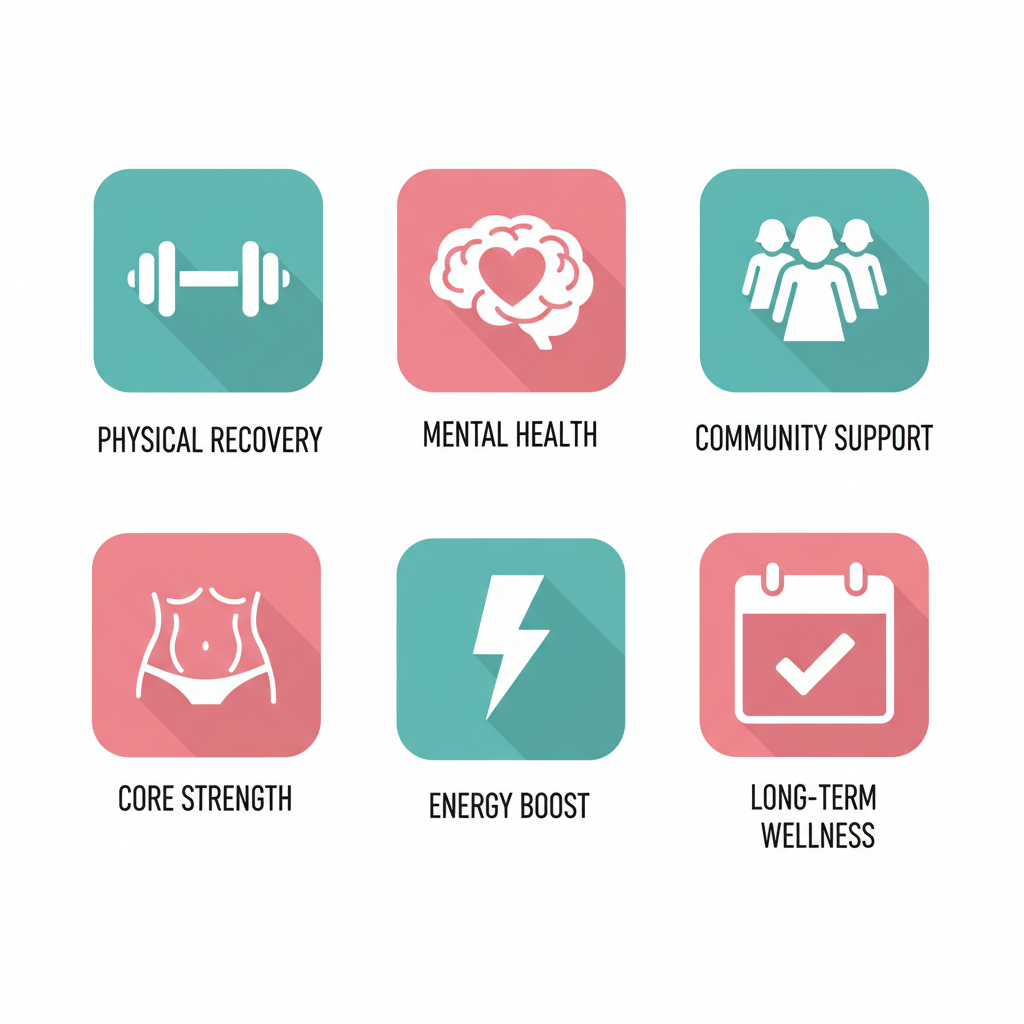
Icons showcasing key benefits of postpartum exercise classes
These visual benefits align with the practical gains new moms notice early on, setting a foundation for sustained progress in strength and daily function.
Mental and Emotional Gains
Beyond physical changes, postpartum exercise classes foster profound mental and emotional resilience. Endorphin release from movement combats fatigue and boosts mood, while group settings build social connections that combat isolation. Yoga-integrated sessions reduce stress, promoting a calmer mindset essential for new motherhood.
- Lower risk of postpartum depression through consistent activity.
- Enhanced self-esteem from achieving fitness milestones.
- Community support in mommy classes strengthens emotional bonds.
Programs like FIT4MOM demonstrate these maternal wellness gains, with 70% of participants reporting improved mood after regular sessions. ACOG echoes this, linking exercise to reduced depression risk. One mom shared, “The group energy lifted my spirits during tough days.” At Divine Strength, fitness classes for women near me incorporate virtual community features, offering accessible support nationwide with mindset workshops (98 words).
Long-Term Wellness Impacts
Engaging in postpartum exercise classes cultivates sustainable habits that extend well beyond initial recovery. Mothers gain sustained energy levels, better sleep, and improved overall vitality, enabling them to thrive in family life. Integrating these routines with nutrition strategies amplifies results, creating a balanced approach to long-term health.
- Builds enduring strength for lifelong activity.
- Boosts energy to handle parenting demands.
- Supports weight management and metabolic health.
Research from ACOG highlights how early exercise establishes patterns for ongoing wellness, preventing chronic issues. Clients often note, “I now have the stamina for playtime without exhaustion.” Divine Strength ties this in with our nutrition plans, using the app for macro tracking and workshops on gut health to ensure holistic, energy-sustaining progress (92 words).
How Postpartum Exercise Classes Work
Postpartum exercise classes near me offer a supportive environment for new mothers to rebuild strength and confidence after childbirth. These sessions focus on gentle, progressive movements tailored to recovery needs, helping participants navigate the early postpartum phase safely. By understanding class session dynamics, women can choose options that fit their schedules and locations, whether in-person or virtual.
Class Structure and Progression
A typical postpartum class follows a structured flow to ensure safety and effectiveness, starting with mindful preparation and building to functional movements. Here’s a step-by-step breakdown of a standard 45-60 minute session:
- Warm-Up with Breathing (10 minutes): Begin with deep diaphragmatic breathing to reconnect with the core and calm the nervous system. Participants sit or lie down, inhaling through the nose for four counts and exhaling slowly, promoting relaxation and oxygen flow.
- Pelvic Floor Activation (10 minutes): Gentle contractions and releases strengthen the pelvic muscles without strain, using cues like imagining lifting a blueberry.
- Core and Mobility Focus (15 minutes): Incorporate light stretches and activations to improve posture and hip openness.
- Strength and Functional Training (15 minutes): Progress to bodyweight exercises like squats or wall pushes, adapted for energy levels.
- Cool-Down Stretching (5-10 minutes): End with restorative poses, such as child’s pose, to release tension and reflect on the session.
Progression occurs gradually over 6-12 weeks, aligning with maternal exercise protocols recommended by the American College of Obstetricians and Gynecologists (ACOG), which advises starting low-impact and increasing intensity as clearance is obtained. For beginners, modifications include seated variations to build endurance without overwhelm. Divine Strength & Conditioning integrates this into their postpartum workout plan, offering scalable videos for home use.
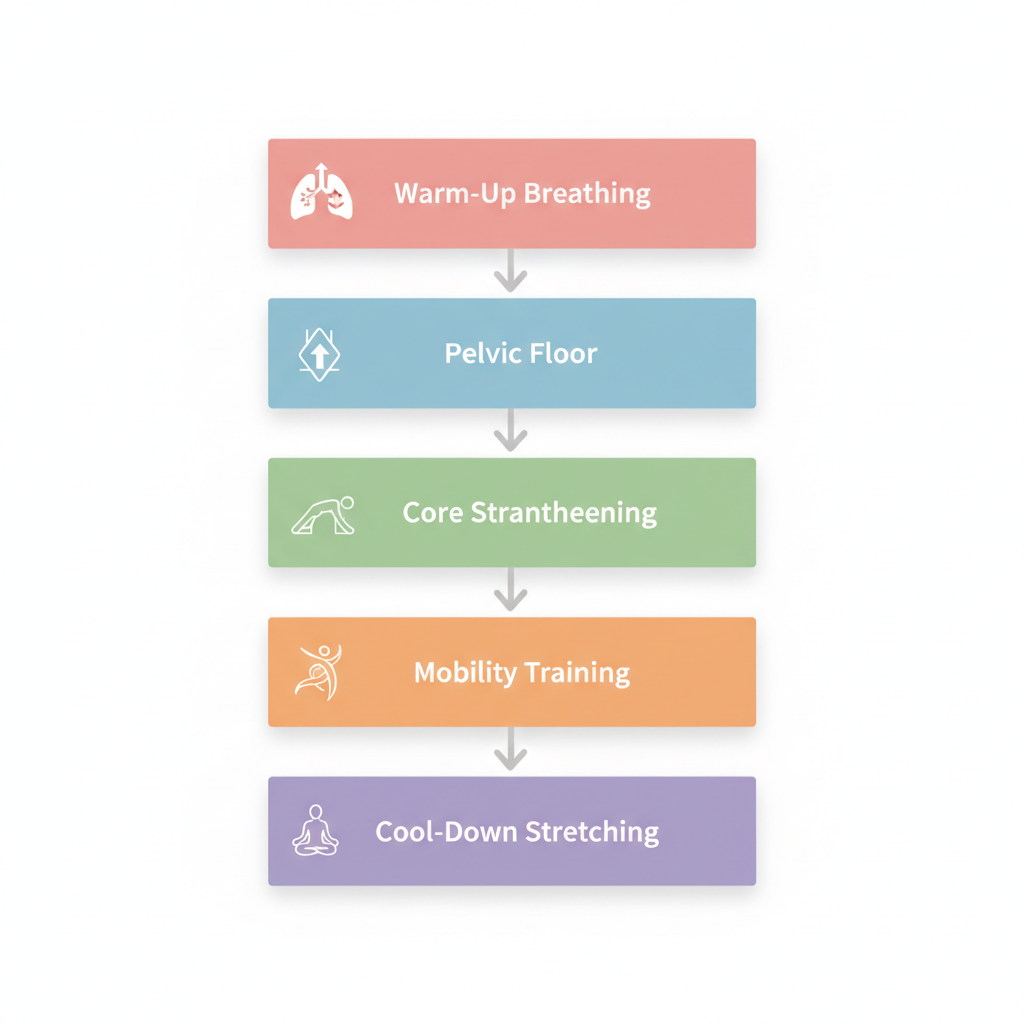
Visual guide to the structure of postpartum exercise classes
This diagram illustrates the seamless flow, making it easier for new moms to visualize and anticipate each phase.
Integrating Core and Pelvic Floor Work
Postpartum core exercises form the cornerstone of recovery in these classes, emphasizing safe reconnection to prevent injury and address common issues like diastasis recti. Sessions integrate targeted protocols that prioritize alignment over intensity, drawing from evidence-based guidelines.
Step-by-step core integration includes:
- Assessment and Breath Work (5 minutes): Check for diastasis recti by gently drawing the belly button to spine during exhales, avoiding bulging.
- Pelvic Floor Engagement (10 minutes): Pair kegels with transverse abdominis activations, holding for 5-10 seconds to build endurance.
- Functional Core Challenges (15 minutes): Progress to heel slides or bird-dog poses on all fours, modified with props like pillows for support.
- Integration into Movement (10 minutes): Weave core cues into full-body exercises, such as squats with pelvic tilts.
ACOG supports these approaches, noting that gradual pelvic floor strengthening over postpartum weeks aids healing without risk. Adaptations for diastasis recti involve transverse-focused moves, steering clear of crunches to allow tissue repair. Divine Strength’s classes embed these postpartum core exercises seamlessly, ensuring participants feel empowered at every step.
Remote and Local Access Options
Accessing postpartum exercise classes extends beyond local studios through innovative digital platforms, blending convenience with community. Divine Strength & Conditioning’s app delivers remote sessions that mirror in-person dynamics, allowing users across the US to join from home.
Key features include:
- Live and On-Demand Videos (20-30 minutes): Follow guided flows with real-time adjustments via chat.
- Weekly Check-Ins (10 minutes): Personalized feedback from coaches to refine form and progression.
- Progress Tracking Tools: Log sessions and metrics to monitor recovery milestones.
- Community Forums: Connect with others for motivation and shared tips.
This app-based delivery complements local options, enabling seamless transitions for those seeking postpartum exercise classes near me via hybrid models. For broader wellness, explore the best online fitness programs for women, which offer tailored postpartum workout plans. Divine Strength ensures virtual participation feels intimate and effective, with ACOG-aligned safety in every module.
Best Practices for Postpartum Fitness
New mothers often seek out postpartum exercise classes near me to regain strength and confidence after childbirth. These sessions provide a supportive environment for recovery, but success depends on tailored approaches that respect the body’s healing process. Drawing from Divine Strength & Conditioning’s expertise, this section outlines key strategies to enhance your routine safely and effectively.
Creating a Personalized Plan
Developing a postpartum workout plan starts with assessing your current fitness level and postpartum stage. Consult a healthcare provider to ensure clearance, then build a weekly structure that begins gently. For beginners, aim for three 20-minute sessions per week, focusing on low-impact activities like walking or light yoga. Progress by adding strength elements, such as resistance bands, after four weeks, increasing to 30-40 minutes.
Here’s a simple checklist for customization:
- Evaluate energy levels and sleep patterns daily.
- Incorporate rest days to prevent fatigue.
- Track progress with a journal or app for adjustments.
Listen to your body; if fatigue or discomfort arises, scale back intensity, as recommended by Mayo Clinic guidelines for gradual reintroduction to exercise. For example, a new mom might start with seated marches before advancing to standing squats. Divine Strength offers custom maternal routines through their coaching, making personalization straightforward and motivating for sustained results.
Incorporating Core Exercises Safely
Postpartum core exercises are essential for rebuilding abdominal strength and addressing diastasis recti. Start with at-home options like pelvic tilts and gentle breathing to reconnect with deep core muscles. Progress to bridges: Lie on your back, feet flat, lift hips slowly while engaging the core, holding for five seconds. Bird-dogs follow: On all fours, extend opposite arm and leg, maintaining stability for balance.
Incorporate these into class routines or home drills, performing 2-3 sets of 8-10 reps, three times weekly. Modifications include using a wall for support in bird-dogs if balance is challenging.
Quick tips for safety:
- Avoid crunches if separation persists.
- Breathe steadily to protect the pelvic floor.
- Stop if pain occurs, per expert advice from FIT4MOM’s balanced programs.
These recovery strength drills not only enhance posture but boost overall resilience. At Divine Strength, guided sessions ensure proper form, empowering moms to progress confidently and feel stronger each week.
Nutrition and Recovery Integration
Combining postpartum exercise classes with nutrition supports muscle repair and energy restoration. Pair workouts with protein-rich meals, like Greek yogurt with berries post-session, to aid recovery. Attend workshops on balanced macros to fuel sustainable progress, focusing on anti-inflammatory foods such as salmon and leafy greens.
Integrate recovery by scheduling restorative yoga after intense days, allowing 48 hours between core-focused sessions. For holistic results, work with a female online personal trainer who tailors plans to your lifestyle.
Warnings include monitoring for overtraining signs like persistent soreness; adjust by adding more carbs if energy dips. An example: A client blending classes with nutrition tweaks saw faster strength gains.
Divine Strength’s workshops and app-based coaching provide seamless integration, fostering long-term wellness and renewed vitality for busy moms.
Embracing Your Postpartum Fitness Journey
As you navigate the postpartum period, discovering postpartum exercise classes near me across the US can be a vital step in your sustainable recovery paths. These classes offer structured support for rebuilding strength, focusing on safe timelines that align with your body’s healing process. From gentle pelvic floor rehabilitation to invigorating group sessions, they emphasize a journey to maternal strength, helping new moms regain confidence without rushing recovery.
Begin with a personalized postpartum workout plan that prioritizes postpartum core exercises, addressing diastasis recti and overall stability. Tailored approaches ensure you progress at your own pace, incorporating modifications for breastfeeding or sleep-deprived days. Divine Strength & Conditioning integrates these elements through their innovative app, delivering on-demand workshops and expert guidance to foster long-term wellness.
Take action today by assessing your fitness goals and reaching out for a custom program. Connect with a female personal trainer online who understands the unique demands of motherhood, offering virtual coaching to fit your schedule. “Your strength is your superpower,” reminds Coach Kimmi.
Embrace this transformative phase knowing consistent exercise supports lifelong health, as per ACOG guidelines. Reclaim your energy and vitality as a mom, stepping into a stronger, more empowered you with Divine Strength’s holistic support.