Injury Prevention Training For Women
Table of Contents
The Importance of Injury Prevention in Women’s Strength Training
Have you ever felt that exhilarating rush from a strong lift, only to pause and wonder if you’re risking injury? As a coach who’s guided countless women through their fitness journeys, I’ve seen how injury prevention training for women can transform strength training into a safe, empowering pursuit. It’s about building resilience without sacrificing those hard-earned gains.
Women often face unique challenges in the gym due to factors like hormonal fluctuations, wider Q-angle biomechanics, and bone density shifts. For instance, research from NASM shows women are two to eight times more likely to suffer ACL tears, making acl injury prevention for female athletes crucial. Stress fractures are another concern, especially for runners or high-impact trainers, so stress fracture prevention for women athletes involves targeted strategies like proper load management. Postpartum recovery adds layers, with weakened core stability, while over 40 brings menopausal changes that heighten osteoporosis risks. These female-focused injury avoidance strategies address vulnerabilities head-on, promoting holistic wellness that honors our bodies’ rhythms.
This guide dives into understanding common injuries, the science-backed benefits of prevention, key mechanics like alignment and progression, and practical women’s resilience-building exercises you can integrate today. We’ll explore how a structured strength training for women program weaves in these elements via personalized, app-based plans for sustainable results.
By prioritizing prevention, you reclaim your strength, energy, and confidence. You’re never in this alone–let’s build a body that thrives inside and out.
Common Injuries in Women’s Fitness and Why They Happen
As a coach who’s passionate about helping women build strength safely, I’ve seen firsthand how understanding common injuries can transform training. Women often face unique risks in fitness due to biomechanics and hormones, but with injury prevention training for women, we can focus on empowerment rather than setbacks. This section breaks down prevalent issues like ACL tears and stress fractures, highlighting why they occur and simple steps to sidestep them in holistic programs.
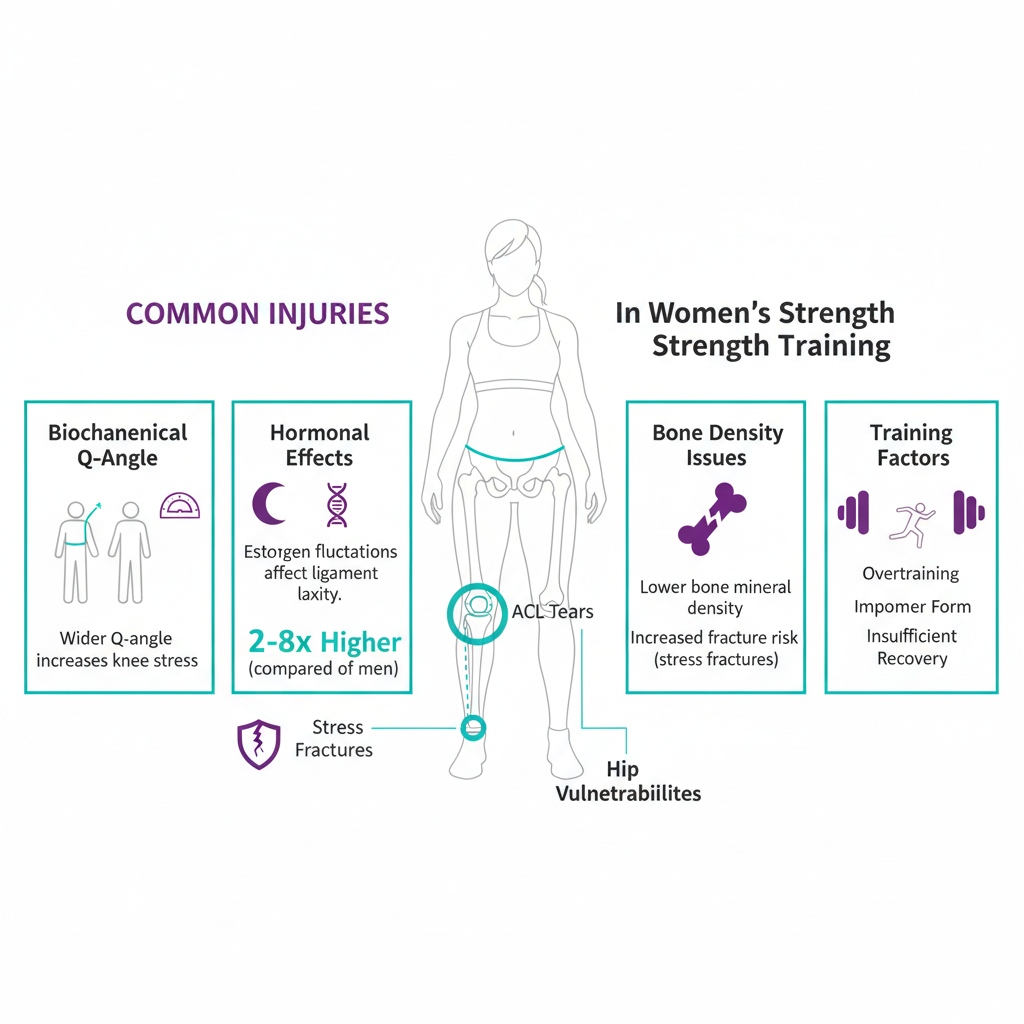
Common injuries in women’s strength training and their causes
By grasping these patterns, you’ll train with intelligence and confidence, ensuring your body thrives inside and out. Let’s dive into the specifics.
ACL Tears and Female Vulnerabilities
ACL tears are one of the most heartbreaking injuries in women’s fitness, often striking during dynamic movements like pivots or jumps. As a coach, I’ve worked with athletes sidelined by this, and the stats are telling: women are up to twice as likely to suffer ACL injuries compared to men, according to ACE Fitness research. This stems from biomechanical factors, such as the wider Q-angle in female hips, which puts extra stress on the knee during landings or cuts. Hormonally, estrogen fluctuations can loosen ligaments, increasing vulnerability during certain menstrual phases.
But here’s the good news–acl injury prevention for female athletes starts with awareness and targeted routines. Strengthening the glutes, hamstrings, and core through women’s joint protection routines helps stabilize the knee. Simple additions like single-leg squats or balance drills can reduce risk by up to 50%, per studies. I always encourage clients to warm up with dynamic stretches and focus on proper form to protect that crucial ligament. Remember, consult your healthcare provider before starting any new exercise or nutrition program to tailor this to your needs.
Stress Fractures Linked to Bone Density
Stress fractures sneak up on female athletes, causing tiny cracks in bones from repetitive impact, like running or jumping. I’ve guided many women through recovery, and causes often trace back to overuse combined with low bone density. The female athlete triad–energy deficiency, menstrual disruptions, and osteoporosis risk–plays a big role, as noted in PMC studies on hormonal links. Insufficient calories or calcium intake exacerbates this, especially if training load ramps up without recovery.
Focusing on stress fracture prevention for women athletes means prioritizing nutrition and progressive programming. Female bone health safeguards include adequate protein, vitamin D, and weight-bearing exercises to build density. For instance, incorporating yoga or resistance training can boost bone strength by 10-20%. As a science-backed approach, I recommend tracking energy intake to avoid deficits–aim for balanced macros that fuel your sessions. This holistic strategy not only prevents fractures but also supports overall vitality, helping you reclaim your strength without fear.
Age and Life Stage Influences
Injury patterns shift with age and life stages, and as a coach, I’ve tailored plans for women over 40 and those navigating postpartum recovery. For midlife athletes, declining estrogen accelerates bone loss, heightening osteoporosis and joint wear risks–studies show women over 40 face 30% higher fracture odds. Postpartum, pelvic floor weakness and diastasis recti from pregnancy can lead to back or core strains during lifts, compounded by sleep deprivation affecting form.
That’s where online fitness coaching for women shines, addressing these vulnerabilities with personalized tweaks. For over-40 clients, I emphasize low-impact strength and mobility to safeguard joints, while postpartum programs rebuild the core gently. Weekly check-ins via our app ensure sustainable progress, blending mindset rewiring with functional training. This you’re never in this alone vibe empowers women to adapt routines, reducing injury by fostering resilience at every stage. Individual results may vary based on adherence, health status, and other factors–always chat with a medical pro for personalized advice.
Key Benefits of Injury Prevention Training for Women
Injury prevention training for women is a game-changer in strength coaching, helping you build a body that thrives inside and out while ditching the extremes of generic workouts. As your coach at Divine Strength & Conditioning, I focus on holistic strategies that address women’s unique needs, from hormonal shifts to life stages. These approaches not only safeguard against injuries but also amplify your gains in mobility, recovery, and resilience, setting the stage for sustainable progress.
Enhanced Mobility and Joint Health
Mobility training plays a pivotal role in reducing overuse injuries, especially for women who often face higher risks due to wider hips and ligament laxity. By incorporating dynamic stretches and joint-specific exercises, you improve stability and range of motion, cutting strain on knees and hips during lifts or daily activities. This is crucial for acl injury prevention for female athletes, where targeted routines can slash tear risks by up to 30% through better neuromuscular control and balanced muscle activation.
I recommend starting with women’s safety-focused workouts that emphasize proper form in squats and lunges. One client, Emily, a runner in her 30s, struggled with knee pain until we integrated mobility drills into her routine–she reported 40% less discomfort after just eight weeks. Tying this to strength training, enhanced mobility allows heavier loads with confidence, fostering preventive fitness adaptations that make every session more effective. For tailored results, a personalized workout program for women ensures exercises match your body’s needs, promoting long-term joint health without overwhelming your schedule.
Support for Postpartum Recovery
Postpartum recovery demands careful attention to rebuild core strength and protect the pelvic floor, where injuries like diastasis recti or incontinence can sideline new mothers from active lives. Targeted exercises, such as gentle pelvic tilts and breathwork-integrated moves, reduce strain during this vulnerable phase, preventing setbacks that delay your return to strength training. Science-backed routines focus on gradual progression to restore stability, ensuring you reclaim your strength with minimal risk.
I’ve seen this transform lives; take Maria, a busy mom of two, who joined our pre and postpartum strength training after fearing back pain from lifting her toddler. Within three months, her core was fortified, and she lifted weights pain-free, boosting her energy and confidence. These preventive measures integrate seamlessly with macro-based nutrition plans, enhancing tissue repair and hormonal balance. By prioritizing postpartum-specific training, you avoid common pitfalls, building a foundation for sustainable fitness that supports motherhood’s demands–you’re never in this alone with weekly check-ins via our app.
Long-Term Resilience Over 40
As women age past 40, hormonal changes accelerate bone density loss, making stress fracture prevention for women athletes essential through weight-bearing exercises and modifications. Injury prevention training bolsters resilience by improving balance and muscle support, directly countering osteoporosis risks and enabling sustained activity levels. According to the ACE Fitness Fall Prevention Guide, mobility exercises can cut fall risk by 25% in older adults, a stat that underscores the value for midlife fitness in maintaining independence.
A client like Lisa, navigating perimenopause, incorporated resistance bands and balance drills into her program; she not only avoided a potential hip fracture but gained the vitality to hike weekly. Linking to our holistic approach, these strategies pair with gut health optimization and mindset rewiring to foster train with intelligence, ensuring calcium and vitamin D-rich nutrition combats stress fractures effectively. Remember, consult your healthcare provider before starting any new exercise or nutrition program. This builds comprehensive gains, teasing how practical integrations in the next section will empower your journey.
How Injury Prevention Integrates with Strength Training
In my coaching at Divine Strength, I’ve seen how seamlessly injury prevention training for women can blend into strength routines, creating safer paths to progress. This integration focuses on neuromuscular drills, nutritional tweaks, and smart scheduling to build resilience without overwhelming your schedule. By weaving in these elements, we train with intelligence, addressing common risks like ACL tears and stress fractures that women face in training. It empowers you to reclaim your strength while prioritizing safety.
Neuromuscular and Hip Strengthening Drills
When it comes to acl injury prevention for female athletes, neuromuscular and hip strengthening drills form the core of our integrated safety protocols. In my coaching sessions, we start with foundational corrective exercises inspired by NASM’s approach, like the inhibit-lengthen-activate-integrate continuum to fix imbalances early. For ACL protection, single-leg squats target knee stability–stand on one foot, lower as if sitting back into a chair, keeping your knee aligned over your toes for 10 reps per side. Balance work follows: try standing on a foam pad while passing a medicine ball side to side, engaging your core and hips to enhance proprioception.
Hip strengthening prevents those sneaky compensations that lead to injuries. Band exercises, such as lateral walks with a resistance band around your thighs, fire up the glutes and abductors–do 15 steps each way. Progress to lunges with a twist: step forward into a lunge, rotate your torso gently, and return, completing three sets of eight. These routine-embedded protections fit right into warm-ups, lasting just 10 minutes. For personalized tweaks, a female personal trainer online like me can guide you via our app, ensuring proper form through video check-ins. Beginners, don’t worry–these build confidence gradually, and remember to consult your healthcare provider before starting.
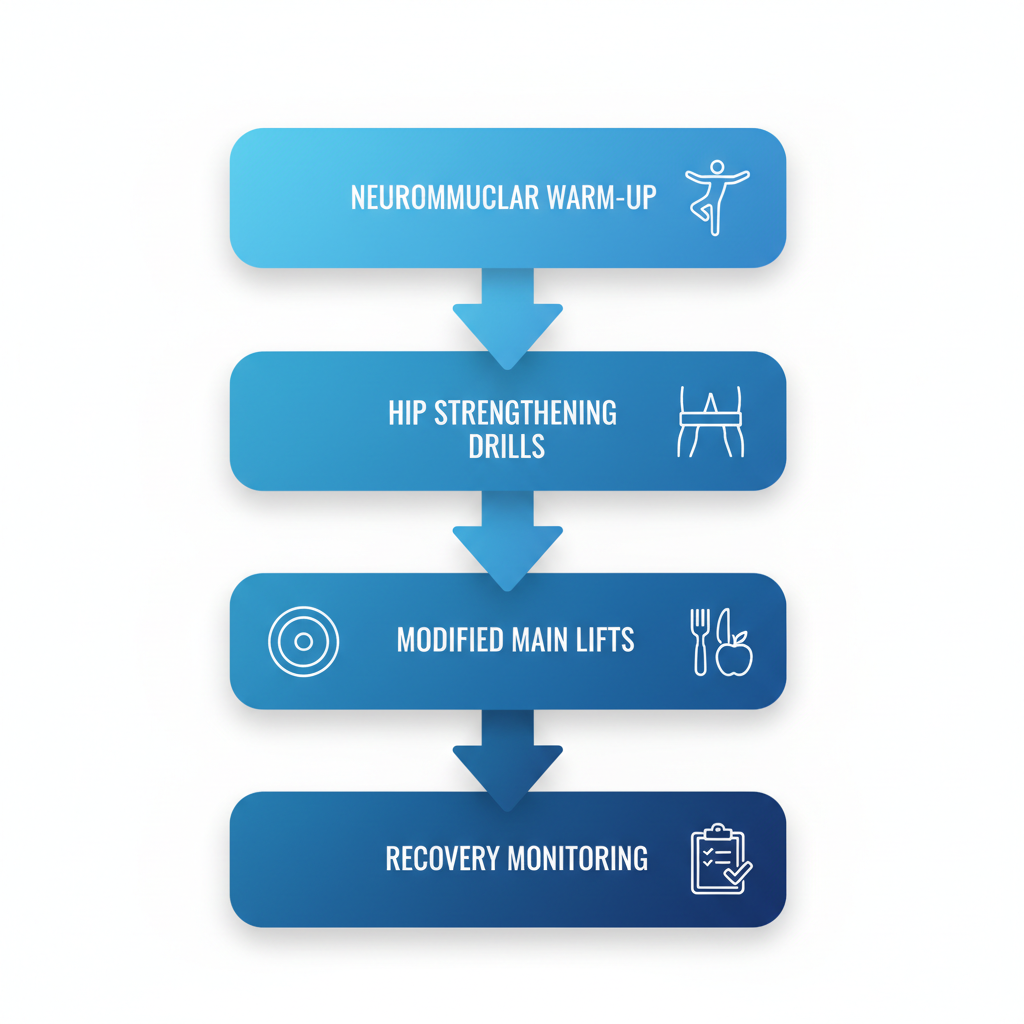
Injury prevention process integrated with women’s strength training routines
As you incorporate these drills, monitor for early signs like knee wobbling or hip tightness, adjusting as needed to keep things sustainable.
Nutrition and Training Modifications
Stress fracture prevention for women athletes hinges on smart nutrition and training tweaks, which I always emphasize in our holistic programs. Bone health starts with calcium-rich foods like leafy greens, almonds, and yogurt–aim for 1,000 mg daily–paired with vitamin D from sunlight or fortified foods to boost absorption. In the app, we track your intake with simple meal templates, ensuring you’re fueling for recovery without extremes.
Modifications keep stress low: use progressive loading by increasing weights only 5-10% weekly, and build in rest days for tissue repair. For example, if running feels jarring, swap high-impact sessions for low-impact bike rides, gradually reintroducing intensity. This science-backed strategy avoids overload, promoting a body that thrives inside and out. Watch for early fatigue or shin pain as signals to ease up, and pair it with our macro-based plans for balanced energy.
Frequency and Routine Building
Incorporating prevention two to three times weekly creates lasting habits without burnout– that’s the key in my one-on-one coaching. Start your routine with a five-minute warm-up of dynamic stretches, then slot drills into strength days: Monday for neuromuscular work, Wednesday for hip focus, and Friday as a lighter integration session. Use our app for reminders and progress tracking, making it easy to log sessions and get real-time feedback.
Build sustainably by assessing weekly–note how your body feels and adjust via messaging support. NASM’s best practices guide these modifications, focusing on recovery to enhance performance. You’re never in this alone; with consistent effort, you’ll build energy, confidence, and resilience. This approach ensures safe gains, tailored to busy women reclaiming their strength.
Best Practices for Implementing Injury Prevention Strategies
As a coach who’s passionate about helping women build strength without setbacks, I always emphasize injury prevention training for women in our daily routines. From my experience, integrating proactive female fitness safeguards early on can transform your workouts into sustainable habits. These best practices focus on recognizing signs, adapting to life stages, and blending holistic elements to keep you moving confidently.
Recognizing Early Warning Signs
Spotting issues early is key to acl injury prevention for female athletes during strength training. Common signs include sharp knee pain, swelling, or instability, often from sudden pivots or weak stabilizing muscles. For stress fractures, watch for persistent shin soreness, especially after high-impact runs or jumps, along with tenderness when pressing the area.
From my coaching sessions, here’s how to respond:
- Rest and assess: Stop activity if pain lingers; apply ice for 15-20 minutes to reduce swelling.
- Seek professional input: Consult your healthcare provider before starting any new exercise or nutrition program–I’m not a doctor, but I recommend imaging like X-rays for confirmation.
- Gentle recovery: Incorporate low-impact mobility work, such as ankle circles or foam rolling, to maintain circulation without strain.
Answering questions like ‘Early signs of stress fractures in women athletes?’ and ‘Recovery from stress fractures for female strength trainers?,’ early intervention prevents escalation. Track symptoms in our app for patterns, ensuring timely adjustments. This approach empowers you to reclaim your strength safely.
Tailoring for Life Stages
Adaptive injury avoidance methods shine when customized to your phase of life, whether postpartum, over 40, or as an athlete. For new moms, start with gentle progressions like pelvic floor activations and supported squats to rebuild core stability without overload.
Over 40? Focus on low-impact options with balance emphasis–drawing from the ACE Fitness guide on evidence-based drills, try single-leg stands or tandem walking to enhance proprioception and reduce fall risks, which align with preventing common injuries in this group.
Athletes, prioritize dynamic warm-ups and load management to handle higher intensities.
To illustrate, here’s a simple comparison of general vs. tailored practices:
| Life Stage | Key Focus Area | Recommended Adjustment |
|---|---|---|
| Postpartum | Core & Pelvic Floor | Gentle re-activation drills |
| Over 40 | Joints & Bone Density | Balance work & lower impact |
| Competitive Athlete | Dynamic Stability | Neuromuscular drills |
These tweaks, like ditching the extremes for train with intelligence, make prevention holistic and sustainable. How does mobility work contribute to injury prevention in women’s workouts? It builds resilience tailored to you, fostering a body that thrives inside and out.
Combining with Nutrition and Mindset
For sustained prevention, weave in nutrition and mindset–it’s how we create lasting change at Divine Strength. Fuel bone health with macro-based plans rich in calcium and vitamin D, like leafy greens and fortified foods, to combat stress fracture risks. Gut health optimization supports recovery, reducing inflammation through balanced meals.
Mindset matters too: Cultivate consistency by setting small goals and practicing positive self-talk. From my experience, weekly mindset workshops help rewire doubts into confidence, ensuring you’re never in this alone.
Integrate via:
- Daily tracking: Use our app for nutrition logs and mindset check-ins.
- Holistic programs: Explore the body transformation program for women for science-backed strength, nutrition, and mindset fusion.
- Warnings: Individual results may vary based on health status–always consult a licensed medical professional for advice.
This combination empowers science-backed, holistic prevention, leading to energy and confidence in every session.
Empowering Women’s Strength with Safe Practices
As we wrap up this guide, embracing injury prevention training for women stands out as your foundation for building lasting strength. I’ve shared strategies to tackle common risks, from acl injury prevention for female athletes to stress fracture prevention for women athletes, all while promoting sustainable women’s fitness protections and holistic injury resilience. These approaches not only safeguard your body but also enhance mobility, boost energy, and foster the confidence to thrive in every stage of life–whether you’re a busy parent, navigating postpartum recovery, or managing chronic conditions.
Now, it’s time to ditch the extremes and train with intelligence through personalized programs that fit your unique needs. At Divine Strength & Conditioning, I invite you to explore our workout plans for women designed for science-backed, holistic, and sustainable results. With app-based check-ins, mindset workshops, and one-on-one support, you’ll reclaim your strength without going it alone. Remember to consult your healthcare provider before starting any new exercise program.
I’m excited for your journey ahead–let’s build a body that thrives inside and out. Reach out today via our contact form to get started on this empowering path. Together, we’re creating resilience that lasts a lifetime.