Strength Training For Women Program
Table of Contents
Building Strength: Women’s Training Programs Essentials
I’ve seen firsthand how a well-designed strength training for women program can transform lives, empowering women across the United States to reclaim their strength, energy, and confidence. As Coach Kimmi at Divine Strength & Conditioning, I believe in ditching the extremes and training with intelligence to build a body that thrives inside and out. Whether you’re navigating busy days as a professional or parent, or seeking female empowerment through fitness, personalized plans make it accessible and sustainable.
Strength training for women offers holistic benefits, combining resistance exercises, nutrition, and mindset strategies. Here’s what you can expect:
- Improved bone density: Essential for long-term wellness, especially as we age.
- Hormonal balance: Supports everything from menstrual cycles to menopause.
- Mental resilience: Boosts confidence and reduces stress, fostering a positive self-image.
According to insights from National Women’s Health and Fitness Day, millions of women are embracing fitness for empowerment and health–yet tailored workout plans for women ensure safety and progress. Beginners should focus on progressive overload, starting with bodyweight moves, while incorporating safety measures like proper form to avoid injury.
This guide dives into fundamentals next, with deep dives on strength training for women over 40 for graceful aging and postpartum strength training for recovery. Explore women’s resistance training routines, practical applications, advanced techniques, and FAQs to find your fit. Our virtual coaching, delivered via app with costs from 149-399 USD monthly, provides expert guidance–you’re never in this alone. Consult your healthcare provider before starting any new exercise or nutrition program to ensure it’s right for you.
Ready to build that strong base? Let’s get started.
Fundamentals of Strength Training for Women
As a coach who’s passionate about helping women build lasting strength, I always start with the fundamentals of a strength training for women program. This approach ditches the extremes and focuses on science-backed, sustainable routines that fit into busy lives. Whether you’re new to fitness or reclaiming your strength after life changes, these basics empower you to train with intelligence and build a body that thrives inside and out. Across the United States, remote options make it accessible for everyone to start small and see real gains in energy and confidence.
Let’s dive into the core exercises that form women’s foundational fitness routines. I recommend beginning with bodyweight movements to master form and prevent injury–key for joint health, especially as we age. Essential picks include squats for lower body power, rows to strengthen your back, and planks for core stability. For squats, stand with feet shoulder-width apart, lower as if sitting back into a chair, then drive up through your heels–aim for 8-12 reps. Rows can use a resistance band: pull elbows back like starting a lawnmower. Planks? Hold a forearm position for 20-30 seconds, keeping your body straight. Modify as needed: knee push-ups instead of full ones, or wall squats for support. These female muscle-building basics not only boost muscle preservation but also support hormonal balance and bone density, per ACE Fitness guidelines.
Progressive overload is the magic behind growth–gradually increasing weight, reps, or intensity to challenge your muscles safely. Start with 2-3 sessions per week, allowing recovery days to rebuild stronger. The ACE Workout Builder highlights how structured resistance training, like these empowering resistance workouts, improves muscular fitness efficiently in just 20-30 minutes. Benefits extend beyond the physical: women gain better posture, reduced stress, and enhanced metabolic health. Studies from ACE show combining strength with cardio yields superior cardiometabolic results, vital for long-term wellness. For instance, regular training can increase bone strength by up to 1-3% annually in women over 40, countering age-related loss.
To illustrate progression, consider this comparison of beginner and intermediate levels.
| Component | Beginner Level | Intermediate Level |
|---|---|---|
| Frequency | 2-3 sessions/week | 3-4 sessions/week |
| Exercises | Bodyweight basics | Dumbbells & bands |
| Duration | 20-30 minutes | 30-45 minutes |
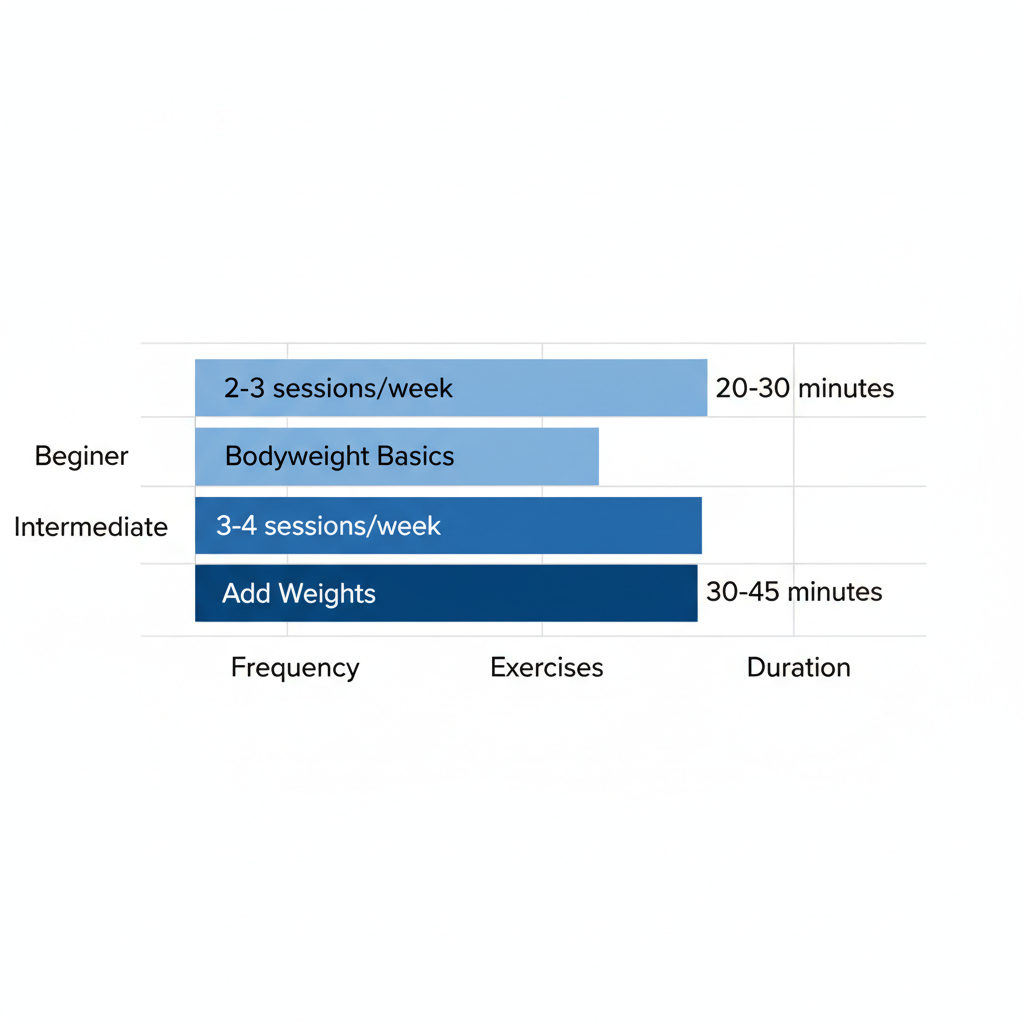
Beginner vs. intermediate strength training components for women
This table shows how beginners build a base before advancing. At the starter level, focus on consistency to avoid overtraining risks. As you move to intermediate, incorporate compound lifts like deadlifts for full-body efficiency, always prioritizing form to protect joints. Women can scale safely by listening to their bodies and consulting a healthcare provider before starting any new exercise program.
Exploring Strength Training for Specific Women’s Life Stages
Adaptations for Women Over 40
I’ve coached countless women over 40, and strength training for women over 40 becomes a game-changer for maintaining energy and confidence. At this stage, hormonal shifts like menopause can sap muscle mass and bone density, but resistance exercises counteract that effectively.
Key exercises include seated leg presses, resistance band rows, and wall pushes. These preserve muscle–declining up to 8% per decade after 30–and boost bone health. Frequency matters: two full-body workouts with rest days allow recovery, while incorporating balance like single-leg stands enhances stability. Menopause benefits are profound; I’ve had clients report better sleep and fewer hot flashes after consistent training, as it supports hormone balance naturally.
| Aspect | Postpartum Focus | Over-40 Focus |
|---|---|---|
| Timeline | 6-12 weeks post-birth | Ongoing maintenance |
| Key Exercises | Core & pelvis | Joint-friendly & balance |
| Benefits | Recovery | Bone density |
Postpartum Recovery Through Strength
Postpartum strength training is a cornerstone for new moms reclaiming their bodies after birth. Stick to medical clearance–typically 6-12 weeks postpartum. Focus on core rebuilding with gentle exercises like glute bridges, bird-dogs, and pelvic floor squeezes. These activate deep muscles without strain, addressing diastasis recti. Programs often run 3-4 times weekly, 20-30 minutes, progressing to squats as strength returns. Benefits include faster recovery and boosted energy for motherhood demands.
Online Programs and Accessibility
When life gets busy, online programs make strength training accessible. As someone offering virtual coaching, I love how a female personal trainer online can deliver personalized plans via apps. Costs range from 149-399 USD monthly. Divine Strength & Conditioning’s app-based track includes macro nutrition and weekly check-ins to ensure your body thrives inside and out.
Practical Strength Training Strategies for Women
As your coach, I’m all about creating a strength training for women program that fits right into your busy life. Whether you’re over 40 or navigating postpartum recovery, these strategies focus on effective home routines. Ditch the extremes and train with intelligence.
| Integration Aspect | Basic Level | Advanced Level |
|---|---|---|
| Macro Focus | Balanced intake | Personalized tracking |
| Meal Planning | Simple templates | Custom recipes |
Frequency and Progression Tips
Aim for 2-4 sessions per week. For women over 40, two focused days might be ideal to allow rest, while postpartum folks can ease in with three shorter routines. Tracking progression is key; use a journal or app to log reps and weights. Start with bodyweight, then gradually increase resistance every 2-4 weeks.
Advancing Your Women’s Strength Training Journey
Advancing means incorporating progressive wellness regimens tailored to your life’s demands. Periodization is key: cycle through phases of intensity to prevent plateaus. For women over 40, emphasize joint-safe progressions. For postpartum journeys, focus on core-stabilizing moves before elevated power training. Integrating nutrition, mindset, and mobility takes your program to the next level.
Frequently Asked Questions on Women’s Strength Training
What are the best strength training exercises for women over 40? Compound moves like squats, deadlifts, and rows build bone density safely.
How often should women over 40 do strength training? ACE recommends up to three sessions weekly with recovery days.
When can I start postpartum strength training? Usually 6-8 weeks post-vaginal birth or 12 weeks after C-section, after clearing with your doctor.
Empowering Your Strength Training Path Forward
From postpartum recovery to aging gracefully, strength training empowers you at every stage. Reclaim your strength with science-backed paths. Start today with our app-based coaching for a body that thrives inside and out.